
Image-Guided Injection
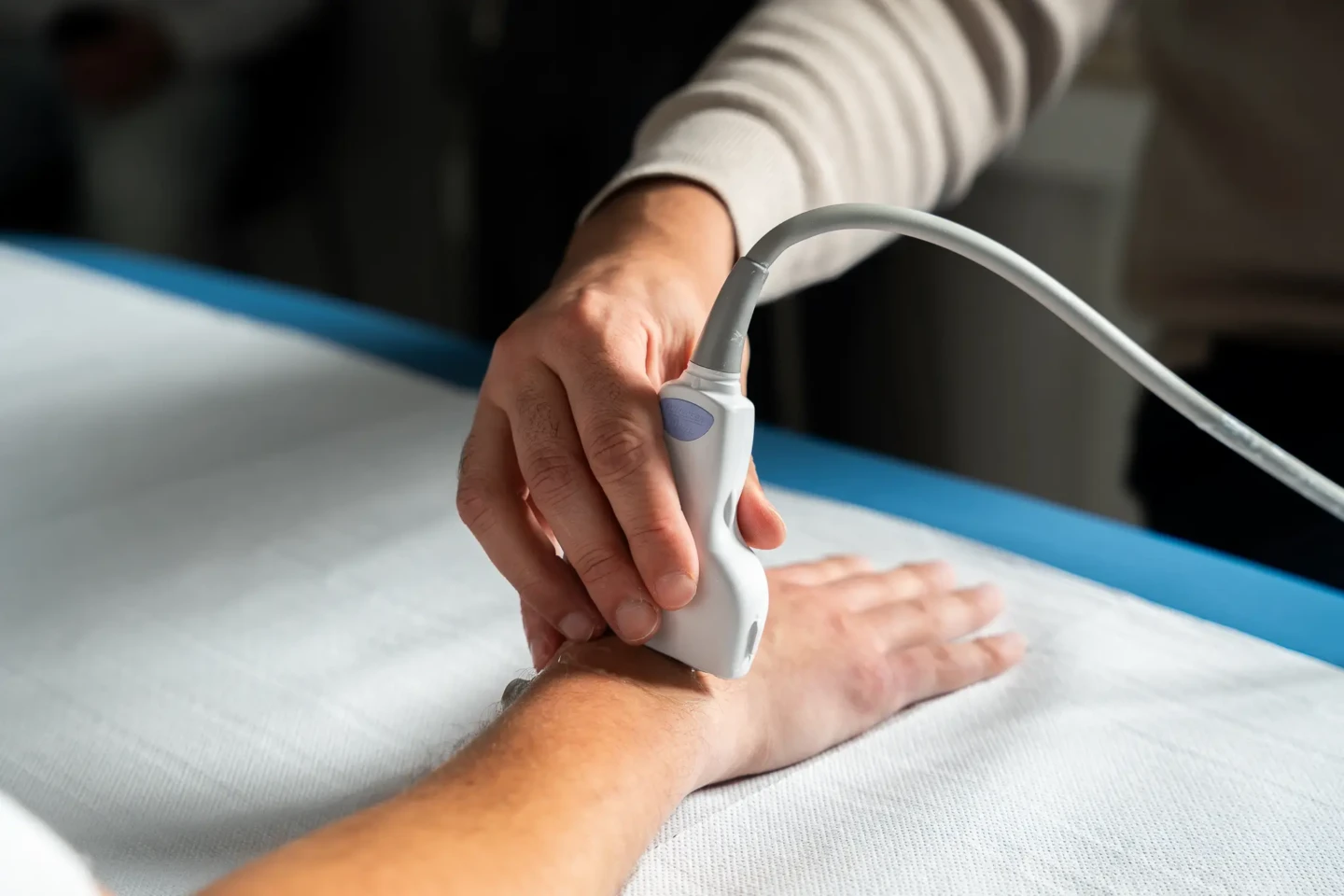
Under ultrasound guidance, we perform targeted injections of medications (anti-inflammatory drugs, local anesthetics, hyaluronic acid) into joints, certain tendons, and around nerves to relieve pain and reduce inflammation.
This technique allows for more precise injection, reducing pain and providing faster relief compared to a “blind” injection. It is generally recommended after conservative treatments have failed, to improve patients’ quality of life.
- Have a detailed examination request written by the prescribing physician that clearly specifies the type of injection and the area to be treated.
- You must bring the medication to be injected (prescribed by your doctor).
- Please list any important medications (especially anticoagulants and antiplatelet agents) and any known allergies so that you can receive appropriate instructions.
- If the diagnostic workup was not performed at our center, please bring any recent imaging studies related to the condition.
- Women are advised to report any possible pregnancy before undergoing the exam.
- In some cases, the use of a contrast agent is required; please let us know if you have any allergies to iodine.
- In patients with diabetes, corticosteroid injections may cause a temporary increase in blood glucose levels in the days following the injection.
- The patient is positioned according to the area to be treated.
- The skin is thoroughly disinfected.
- The doctor inserts a thin needle under X-ray or ultrasound guidance to precisely reach the target area.
- The injection is administered using the appropriate medication.
- The needle is removed, and a bandage is applied.
The exam takes about 10 to 15 minutes and is generally well tolerated.
Post-procedure recommendations (rest, resuming activities) are provided to you in accordance with your protocol.
- After the injection, it is recommended that you rest for a few hours and avoid strenuous activity for 48 hours.
- After an injection, the pain may temporarily increase within the first 48 hours. This reaction is normal and is caused by the injection of the medication into the inflamed area. The pain can be relieved by taking pain relievers.
- When corticosteroids are injected, the medication does not take effect until 2 to 3 days later, but its effects then last for several weeks to several months.
- A vagal reaction (sweating, dizziness) may occur during the injection, but it is always harmless.
- Hypertensive, infectious, allergic, or hemorrhagic complications are rare.